Field briefing
Legal Data Analysis: How Law Firms and In-House Counsel Use Analytics for Litigation Strategy, Contract Intelligence, and Compliance
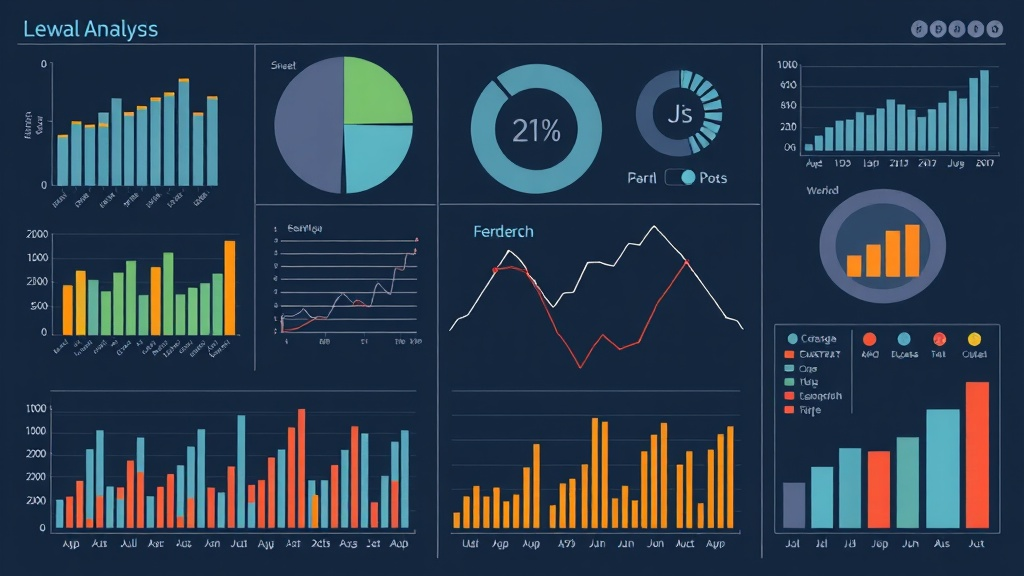
Legal data analysis is reshaping how law firms, corporate legal departments, and regulators make decisions. By turning large volumes of legal text and transactional records into actionable insights, data-driven approaches speed up work, reduce risk, and reveal patterns that would otherwise remain hidden.
What legal data analysis does best
– Litigation strategy: Analytics identify opposing counsel’s tendencies, judge rulings, and past case outcomes to inform filing decisions, settlement timing, and argument emphasis.
– Contract intelligence: Automated review highlights risky clauses, expiration dates, and deviation from standard terms, improving contract lifecycle management and reducing manual review time.
– Compliance monitoring: Continuous analysis of communications, transaction logs, and policy adherence flags anomalies and helps meet regulatory requirements across jurisdictions.
– Due diligence and M&A: Rapid extraction and comparison of obligations, liabilities, and intellectual property positions shortens deal timelines and surfaces deal breakers early.
– Pricing and operations: Time-entry and billing analytics reveal profitability by matter, attorney, or client, supporting staffing decisions and alternative fee arrangements.
Core components of an effective program
1. Clear business objectives: Start with measurable goals—reduce review time by a target percentage, cut litigation spend, or improve contract renewal rates.
Objectives guide data selection and evaluation.
2. Quality data foundation: Legal data is often unstructured. Invest in ingestion pipelines, deduplication, normalization, and secure storage. Metadata—custodian, date, jurisdiction—matters just as much as the content.
3. Domain taxonomies and annotations: Establish consistent tagging for issue types, clauses, and outcomes. A well-curated taxonomy speeds training of models and ensures reliable search and reporting.
4.
Multidisciplinary teams: Combine legal expertise with data specialists and IT security to ensure outputs are legally sound, technically robust, and privacy-preserving.
5. Explainability and validation: Legal decisions demand transparency.
Use models and analytics that provide interpretable results and back them with manual spot checks and ongoing validation against real outcomes.
Privacy, ethics, and governance
Handling privileged communications and personal data requires strict governance. Implement access controls, encryption, audit trails, and data minimization. Ensure cross-border data transfers comply with applicable privacy frameworks, and document decision processes to support defensibility in regulatory or discovery settings.
Practical implementation tips
– Pilot before scaling: Run a focused pilot on a high-impact use case to validate approach and measure ROI.
– Integrate into workflows: Embed analytics into familiar platforms—matter management, e-discovery, or contract repositories—to increase adoption.
– Train users: Offer targeted training for lawyers and staff so insights are used correctly and consistently.
– Monitor metrics: Track KPIs such as review time per document, contract cycle time, predictive accuracy for case outcomes, and cost savings to evaluate impact.
– Maintain feedback loops: Capture user corrections and case outcomes to refine taxonomies and improve future analysis.
Common pitfalls to avoid
– Ignoring data governance: Poorly managed data leads to unreliable results and exposes organizations to legal risk.
– Overreliance on automation: Automated tools amplify both strengths and errors; human oversight remains essential for high-stakes decisions.
– Skipping explainability: Opaque outputs reduce trust and make defensibility difficult in legal contexts.
Legal data analysis is not a silver bullet, but when deployed thoughtfully it becomes a force multiplier—improving speed, reducing risk, and turning complex legal signals into clear strategic choices. Start with a defined problem, build a reliable data foundation, and iterate with legal practitioners at the center to realize the full value of analytics.